
Description
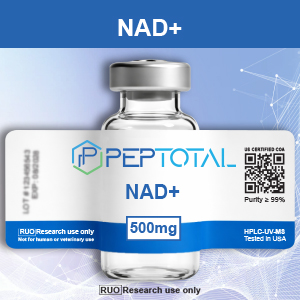
NAD+ (Nicotinamide Adenine Dinucleotide) is a naturally occurring nucleotide that plays a central role in cellular metabolism, energy production, and DNA repair. It is also believed to function as a secondary messenger, participating in calcium-dependent signaling pathways and potentially contributing to immune regulation.
NAD+ is synthesized naturally via the de novo pathway, converting the amino acid tryptophan through several enzymatic steps. It can also be formed from precursors such as nicotinamide, nicotinic acid, nicotinamide riboside, and nicotinamide mononucleotide. Once synthesized, NAD+ participates in over 500 enzymatic reactions, serving as a coenzyme in redox reactions and being converted to NADH, the energy-carrying form critical for metabolic processes.
Overview
NAD+ interacts with three major classes of enzymes, often referred to as NAD+-dependent enzymes:
• Sirtuins (SIRTs): Deacetylase enzymes involved in mitochondrial function, stem cell regeneration, and neuroprotection, supporting cellular homeostasis.
• Poly ADP Ribose Polymerases (PARPs): A family of 17 enzymes that use NAD+ to synthesize poly ADP ribose polymers, contributing to genome stability and DNA repair.
• Cyclic ADP Ribose Synthetases (cADPRS): Enzymes such as CD38 and CD157, which hydrolyze NAD+ and are linked to stem cell regeneration, DNA repair, and immune function.
Because all three enzyme classes depend on NAD+, they may compete for NAD+ availability, highlighting the importance of maintaining optimal NAD+ levels for balanced cellular function. Proper NAD+ balance may maximize metabolic efficiency, genomic stability, and cellular repair mechanisms.
Reference
https://pubmed.ncbi.nlm.nih.gov/?term=NAD
Storage & Molecular Integrity
Peptides are highly specific amino acid chains with delicate molecular structures. To maintain maximum biological activity and prevent degradation or aggregation (“gelation”), strict adherence to the following storage protocol is required:
- Total Light Protection
Peptides are photosensitive. Store reconstituted vials in complete darkness. We recommend wrapping the vial in aluminum foil or using an opaque storage case. - Refrigeration Required (35°F–46°F)
After reconstitution, store vials in the back of the refrigerator. Do not store in the refrigerator door, as temperature fluctuations may compromise stability. - Zero Agitation Policy
Do not shake the vial. When reconstituting, allow bacteriostatic water to flow gently down the inside wall of the vial. Swirl slowly only if necessary. Excess agitation may damage peptide structure and reduce effectiveness.
⚠️ IMPORTANT: Failure to follow proper storage procedures may result in loss of potency and reduced performance.
• • • PLEASE READ • • •
RESEARCH USE ONLY DISCLAIMER AND LIMITATION OF LIABILITY
All articles, materials, content, and product-related information made available on this website are provided strictly for informational and educational purposes only and shall not be construed as medical, pharmaceutical, clinical, or therapeutic advice, nor as a representation of safety or efficacy for any human or animal use.
These products are not drugs, pharmaceuticals, biologics, medical devices, dietary supplements, food products, or cosmetics, and they have not been evaluated, approved, or authorized by the United States Food and Drug Administration (FDA) or any other regulatory authority for human or animal use.
The Company reserves all rights and expressly disclaims any liability arising from misuse, improper handling, or unauthorized application of its products.
Additional information
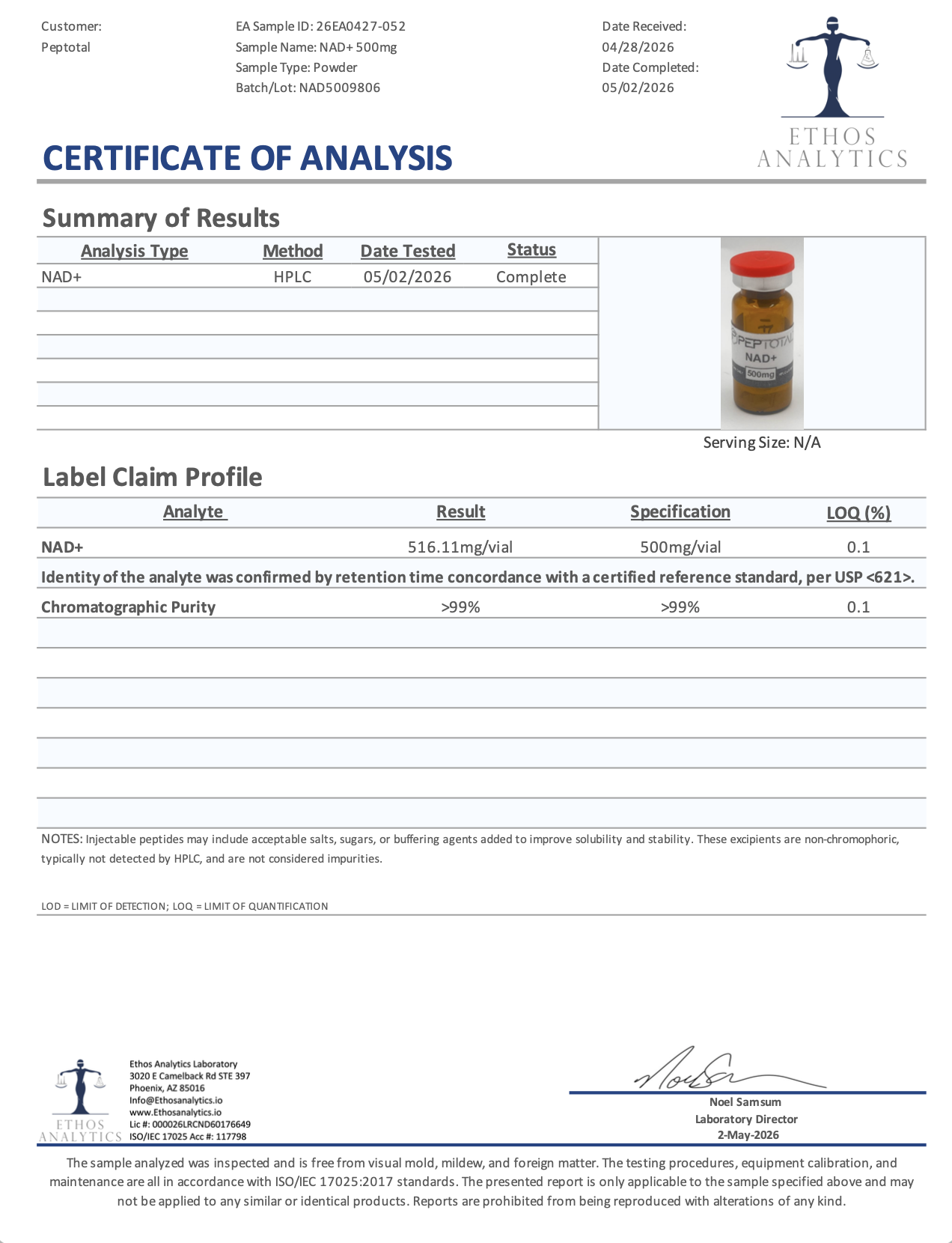
| WEIGHT (mg) | 500mg |
|---|---|
| PURITY LEVEL | ≥ 99%+ |
| CERTIFICATE OF ANALYSIS | HPLC US Certified |
Only logged in customers who have purchased this product may leave a review.
Reviews
There are no reviews yet.