
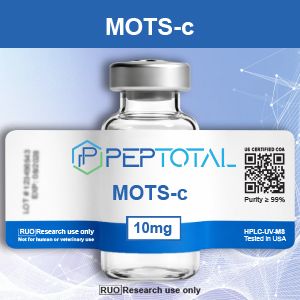


Description
MOTS-c (mitochondrial open-reading-frame of the 12S rRNA-c) is a novel mitochondria-derived peptide composed of 16 amino acids. It is expressed in various tissues and circulating plasma, suggesting both cell-specific and systemic hormonal functions.
Research indicates that MOTS-c may act by activating the AMP-activated protein kinase (AMPK) pathway, a key regulator of cellular energy metabolism. It is one of only two mitochondrial-derived peptides (MDPs) extensively studied, alongside Humanin.
Under conditions of metabolic stress, MOTS-c is believed to translocate to the cell nucleus, where it can influence gene expression. Additionally, the peptide can be released into the extracellular space, functioning as a “mitochondrial hormone” or mitokine, potentially mediating systemic metabolic effects.
Overview
MOTS-c is a mitochondria-derived peptide studied for its potential roles in cellular metabolism, muscle function, fat regulation, bone health, vascular function, and cellular longevity. Research across animal models suggests a broad spectrum of bioactivity, often linked to age-related changes in MOTS-c expression. Declining levels of MOTS-c with age may contribute to metabolic dysfunction, insulin resistance, and cellular aging. The peptide is also reported to interact with key aging regulators such as NAD+ and sirtuins, indicating potential involvement in pathways that influence cellular lifespan. Physical activity may enhance endogenous MOTS-c expression, further supporting metabolic and cellular health.
MOTS-c and Muscle Metabolism
With aging, skeletal muscles often develop insulin resistance, reducing glucose uptake. Experimental studies indicate that MOTS-c may stimulate AMPK activation, leading to increased glucose transporter expression and improved muscle metabolism. The peptide may also influence metabolic pathways including the folate-methionine cycle and purine biosynthesis, which could shift cellular energy priorities and support both anabolic and catabolic processes. Systemically, MOTS-c acts as a mitochondrial hormone (mitokine), influencing glucose homeostasis, insulin sensitivity, and energy metabolism in skeletal muscle and potentially adipose tissue.
MOTS-c and Fat Cell Metabolism
MOTS-c may translocate from mitochondria to the nucleus, where it interacts with genes containing antioxidant response elements (ARE), potentially influencing stress response pathways such as NRF2 signaling. In high-fat diet murine models, MOTS-c was associated with enhanced glucose utilization, increased AMPK activation, and reduced fat accumulation, suggesting a role in insulin sensitivity and metabolic homeostasis. These actions point to MOTS-c as a regulator of glucose and lipid metabolism, coordinating energy use and nutrient sensing.
MOTS-c and Bone Health
MOTS-c may support osteogenic differentiation through activation of the TGF-β/Smad signaling pathway, upregulating genes such as TGF-β1, TGF-β2, Smad7, ALP, Bglap, and Runx2. Experimental studies indicate that this peptide can stimulate osteoblast activity and bone marrow stem cell differentiation, potentially enhancing bone density and strength.
MOTS-c and Cardiovascular Function
While MOTS-c is not directly associated with cardiac contractility, studies suggest it may support endothelial function in blood vessels, potentially influencing vascular reactivity, blood pressure regulation, and clotting processes. Animal models indicate improved microvascular and epicardial endothelial function, possibly mediated by AMPK activation. MOTS-c may therefore serve as a biomarker of vascular health.
MOTS-c and Cellular Longevity
MOTS-c has been linked to cellular lifespan and aging pathways. Structural variations, such as the substitution of glutamate with lysine, may alter its activity, though mechanisms remain under investigation. Research suggests MOTS-c could contribute to enhanced longevity via its mitokine function, modulating metabolism and stress-response pathways at the cellular level.
Reference
https://pubmed.ncbi.nlm.nih.gov/?term=mots-c
• • • • • • • • • • • • • • • PLEASE READ • • • • • • • • • • • • • • •
RESEARCH USE ONLY DISCLAIMER AND LIMITATION OF LIABILITY
All articles, materials, content, and product-related information made available on this website are provided strictly for informational and educational purposes only and shall not be construed as medical, pharmaceutical, clinical, or therapeutic advice, nor as a representation of safety or efficacy for any human or animal use.
These products are not drugs, pharmaceuticals, biologics, medical devices, dietary supplements, food products, or cosmetics, and they have not been evaluated, approved, or authorized by the United States Food and Drug Administration (FDA) or any other regulatory authority for human or animal use.
The Company reserves all rights and expressly disclaims any liability arising from misuse, improper handling, or unauthorized application of its products.
Additional information
| WEIGHT (mg) | 10mg |
|---|---|
| PURITY LEVEL | ≥ 99+ |
| CERTIFICATE OF ANALYSIS | HPLC US Certified |
Only logged in customers who have purchased this product may leave a review.
Related products
-
+ wishlist
Melanotan 2 (MT2) 10mg
Original price was: $65.00.$40.00Current price is: $40.00.Read more
Reviews
There are no reviews yet.